
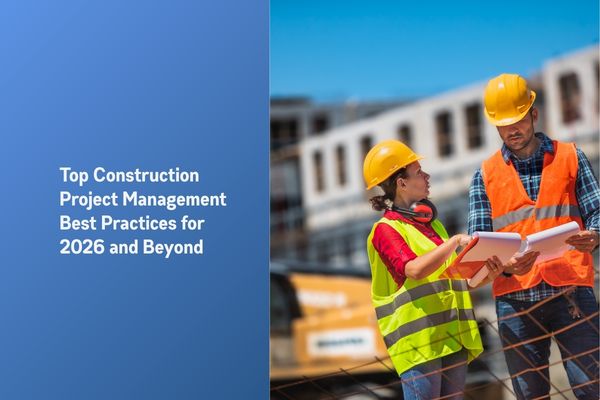
Top Construction Project Management Best Practices For 2026 And Beyond
A site manager walks onto a project and notices a few things off – materials not in place, schedules overlapping, and the team unsure what to do next. Moments like these show why construction project management best practices are so important.
There are practical ways to keep projects running smoothly without constant stress. As we move into 2026, projects are becoming larger, and timelines are becoming tighter. Strong construction project management practices help teams stay clear, organized, and confident.
In this article, I'll share simple tips to tackle common challenges and keep your projects on track. So let's get started.
Top Construction Project Management Best Practices For 2026 And Beyond
What is Construction Project Management?
Why Following Construction Project Management Best Practices Matters Now?
The Construction Project Management Process (How It Usually Plays Out)
1. Early Planning and Scope Alignment
2. Scheduling and Resource Planning
3. Execution with Regular Check-Ins
4. Cost, Quality, and Closeout
The 5 C’s of Construction Project Management Best Practices
Practical Construction Project Management Best Practices for Teams
1. Planning and Scheduling That Works in Reality
2. Managing Materials and Budgets Without Stress
3. Integrating Technology: Support, Not Replacement
4. Team Management and Communication That Counts
What is Construction Project Management?
Construction project management is the organized process of planning, coordinating, and controlling a construction project from start to finish.
It involves managing resources, timelines, budgets, and teams to make sure the project meets quality standards and is completed efficiently. In simpler terms, it involves keeping all moving parts in sync.
A strong construction project management process allows managers to anticipate problems, allocate resources wisely, and maintain smooth communication between workers, contractors, and stakeholders.
For example, tracking material deliveries or scheduling inspections in advance can prevent costly delays. In real project environments, success isn’t guaranteed.
According to Harvard Business Review, only about 35% of projects worldwide finish on time and within budget, even when they follow formal project management guidelines.
This low success rate shows why construction project management best practices are so important, they help your project beat the odds rather than become another statistic.
👉 Read this article to dive deeper into how construction project management works in practice: Construction Project Management (A Comprehensive Guide)
Why Following Construction Project Management Best Practices Matters Now?
Even small missteps in construction can snowball into major delays or cost overruns. Using construction project management best practices provides practical ways to prevent these problems.
Clarity: Teams know their roles and responsibilities, which reduces mistakes.
Efficiency: Proper planning and material management help projects stay on schedule.
Accountability: Everyone knows who is responsible for what.
Safety: Following protocols reduces accidents and injuries.
When your team applies these practices consistently, you stop reacting to problems and start preventing them.
The Construction Project Management Process (How It Usually Plays Out)
Let’s break down the construction project management process into steps that make sense on the ground.
1. Early Planning and Scope Alignment
This stage is about setting clear expectations. What’s included, what’s not, and what success looks like. Many project issues start when the scope is understood but never written clearly.
When teams take time here, later decisions become easier. Though changes still happen, they feel managed rather than chaotic.
2. Scheduling and Resource Planning
Schedules work best when they reflect reality, rather than ideal conditions. Projects run more smoothly when material lead times, labor limits, and inspections are considered early.
Teams that revisit schedules often stay flexible. This keeps crews moving and reduces waiting time that quietly drains budgets.
3. Execution with Regular Check-Ins
During execution, small check-ins matter more than big reports. Short updates help teams catch delays early. When progress stays visible, decisions feel faster and less stressful.
This part of the process keeps plans connected to what’s happening on site in reality.
4. Cost, Quality, and Closeout
Cost and quality tracking usually run side by side. When one slips, the other follows. Projects that monitor both regularly avoid heavy rework later. Closeout then becomes easier, with fewer loose ends and clearer handovers for future teams.
The 5 C’s of Construction Project Management Best Practices
The 5 C’s – Complexity, Criticality, Compliance, Culture, and Compassion, act as a simple lens for managers to assess and guide projects. They’re not rules; they’re checkpoints that help teams stay aligned while navigating daily challenges on site.
1. Complexity
Understand how complicated a project truly is.
Large projects with multiple subcontractors, tight deadlines, or unusual designs require more attention. Identifying complexity early helps in choosing the right tools, schedules, and communication methods.
2. Criticality
Recognize which tasks or stages will have the biggest impact if delayed. By focusing on critical points, teams can prioritize resources and prevent cascading delays.
3. Compliance
Following regulations, codes, and internal procedures isn’t optional. Strong construction site management practices keep projects safe and reduce the risk of legal or quality issues.
4. Culture
A healthy site culture improves collaboration. Teams that feel respected and heard respond faster to issues and maintain quality standards.
5. Compassion
Yes, compassion.
Understanding pressures on staff, subcontractors, and suppliers builds trust and smoother coordination. Projects run more efficiently when people feel supported, not just managed.
Practical Construction Project Management Best Practices for Teams
The 5 C’s work best when applied daily. Here’s how teams turn them into practical construction project management best practices.
1. Planning and Scheduling That Works in Reality
One of the biggest differences between projects that finish smoothly and those that fall behind is how schedules are planned and updated. In reality, schedules aren’t just dates on a chart – they’re how people, materials, and inspections line up.
Construction project management practices suggest breaking the schedule into realistic segments and reviewing progress frequently. Daily check-ins might feel like extra work, but small adjustments early often prevent bigger issues later.
Aligning deliveries with labor availability and updating stakeholders quickly is part of a reliable construction project management process that keeps work flowing instead of piling up.
2. Managing Materials and Budgets Without Stress
Materials and budgets are the backbone of any project.
When material deliveries are late, or budgets drift, schedules slip, and stress rises. That’s why the best construction project management practices recommend clear tracking of deliveries, early procurement, and open cost reviews.
According to Autodesk research cited by Deloitte, around 40 % of construction projects report delays tied to supply chain disruptions, including material shortages or logistics issues that slow delivery. That can ripple through schedules, tying up crews and affecting costs.
This means nearly half of the delays you might see on site stem from material or supply problems. When teams connect material planning to budget tracking early in the construction project management process, unexpected costs and idle labor are easier to avoid.
Linking schedules, costs, and procurement into one clear workflow, and reviewing them often (weekly rather than monthly), gives you real visibility on how your project is progressing.
3. Integrating Technology: Support, Not Replacement
Technology can make successful construction project management a lot easier, but it doesn’t replace human judgment. Software is best used as a tool to track progress, monitor materials, and simplify communication, rather than as a system that enforces everything automatically.
Dashboards, shared updates, and alerts are useful, but their real value comes when teams use them alongside regular site conversations.
Teams that integrate tech gradually, train staff, and keep it simple, find that it highlights bottlenecks and clarifies workflow without adding unnecessary complexity.
The key idea is that technology supports decisions, but people still make them. Following this approach aligns with everyday construction project management examples, showing that simple tools often outperform overly complex systems.
👉 Want to know how project managers use automation to reduce admin work, without losing on-site control? Read this: Still Doing It All Manually? Project Management Automation Is the Upgrade You Need Now
4. Team Management and Communication That Counts
Even the best schedules fail if teams aren’t aligned. Strong teams rely on clarity, accountability, and ongoing communication. Daily check-ins, clear task assignments, and shared progress reports reduce misunderstandings and errors.
Projects with consistent and structured communication cycles tend to surface problems early, before they become costly delays or disputes.
Managing teams well also means listening to on-site input. Field teams often spot issues before leaders do. When this insight gets factored into planning and adjustments, it improves team trust and overall project flow.
5. Safety and Quality: Non-Negotiables
Projects that follow documented construction site best management practices see safer outcomes and lesser setbacks. You heard that right. Safety isn’t simply about compliance, it protects timelines, budgets, and team morale.
Quality also matters. Rework due to errors can account for a significant portion of project costs. When teams build quality checks into daily routines, mistakes get caught earlier, not after materials and time have already been spent.
Teams that combine safety and quality checks into daily reporting find that lower disruptions happen over time, and teams can work with confidence instead of reacting to issues.
Final Words from Purely Startup
Construction does not forgive weak planning. Construction project management best practices give teams control in a fast-moving industry. They reduce stress, protect budgets, and build trust across sites.
As 2026 approaches, firms that stick to clear processes will outperform those chasing shortcuts. If your projects feel reactive, it may be time to reset your approach.
Want help applying these practices to your next project? Reach out to us at Purely Startup and start building with clarity.